 Cart
Cart
1
“Put your clothes back on.”
The doctor turned his back on him, trod heavily across the six feet that separated him from his desk, and sat down, as though to compile some kind of report, but he didn’t compile anything, he clasped his hands on the desktop and looked at him with a mixture of friendship and indolence, resigned.
“Well?”
“Well, nothing, as usual, the test results are a mess, you’re a mess, Manlio, let’s chalk it up to old age and leave it at that.”
Manlio Parrini chuckled.
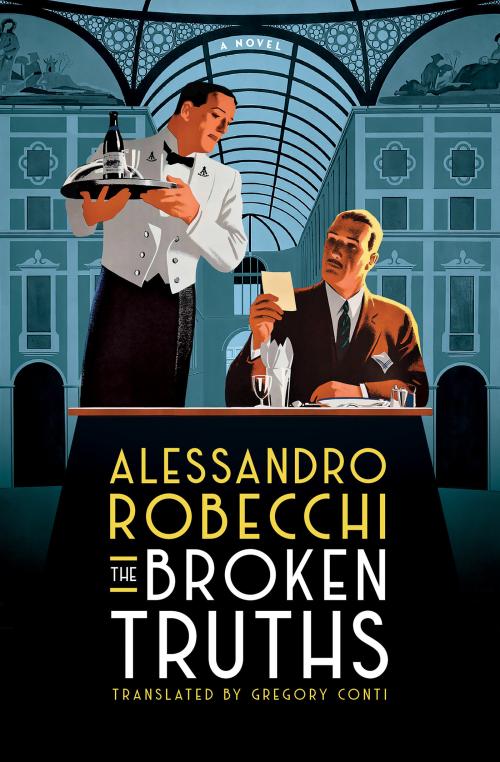
Carlo Dizzani, his doctor, has been his friend since time immemorial. Since they had called him in an emergency when an actor collapsed on the set, and he had arrived, a young doctor on call, fast, efficient. He’d resolved the problem, kid stuff in clinical terms, and had hung around a little to observe, enraptured by that circus of cut-and-dried orders and technically mysterious maneuvers. Lights, filters, camera right, camera left, roll camera, action! Without anyone having asked him, with one of those agreements made with glances and chin thrusts, he had become the official physician on every set directed by Manlio Parrini, the Maestro, and then confidant, friend. He’d even married an actress; that’s life. And after the Maestro had stopped shooting, after the worldwide success of Broken Truths, Dizzani was the only animal present on those sets with whom Parrini had kept in touch.
Checkups, emergency operations, consults, every so often a dinner date.
“Just as long as you don’t start in with that doctor bullshit about no smoking, no drinking, no fun of any kind.”
Dizzani smirked.
“And for what? To waste my breath? I don’t want to know anything, Manlio. If you tell me you smoke a pack a day, that means you smoke two, if you tell me you drink a bottle, that means you drink two. What I can tell you is this: cut everything in half, walk more, take some baby aspirin. We don’t give any guarantees here, but at least I won’t have you on my conscience.”
Now dressed—his shirt collar not quite right, half inside and half outside the round neckline of his sweater—Manlio Parrini was sitting in the patient’s chair, in front of the doctor’s desk, a chair that was meant to be the scene of tears, worries, and anguish.
“Aren’t you going to prescribe something for me, doctor?”
He had said it with a laugh, in the voice of an imploring old lady, one of those put-ons that you can do only to someone who’s a friend and who knows you as well as he knows himself. Dizzani laughed too.
“Yeah, here’s a prescription for you. Buy a house on the lake, get yourself a dog, take him out for walks, and take out a membership at the bocce club . . . How old are you, seventy-four? Seventy-five? Buck up, it won’t be long now, they’ll bury you in the history of cinema.”
“I’ve already been buried there for years now,” the Maestro responded, still laughing.
But then he turned serious, and almost lost in thought, added:
“I’m not so greedy, all I need is a year, Carlo, I’m thinking about making a film.”
There.
He’d said it.
He’d said it without wanting to, it just slipped out, somehow. But now that he was biting his tongue, looking at the amazement on the other’s face, the surprise painted in his friend’s wide-open eyes, he told himself that it was just fine. His doctor was the first to know it, just as he had been the first to know, a long time ago, that he was never going to make another one. Finished. Done. Manlio Parrini was taking his leave from the set after his worldwide masterpiece.
From disgust, from fear, from . . .
In February of 1998 there was a cold wind blowing in Montreal. Parrini was accepting an award, one of the many. Broken Truths had become a milestone; Cahiers du cinéma had dedicated a special issue to him, festivals all over the world were fighting over who would get to have Parrini, or rather Monsieur Parrinì to speak about his art, about the neo-neo-realism that was revolutionizing European cinema. France was mad over him, Wim Wenders called him “Maestro,” Hollywood was courting him in the only way it knew how: suitcases full of dollars and promises of golden statues.
He had discovered himself to have become a sort of walking cult. What nonsense.
Not long ago, Anita had up and left him, running off with an actor who was younger than her, so stupid. Maybe she couldn’t deal with being the wife of a kind of monument, a champion, someone that all the film schools were putting alongside Fellini, or Antonioni, a director that students were choosing as a thesis topic. Or maybe they had already said to each other everything that a man and woman can say.
He had come to Montreal with Carlo Dizzani, his friend, and it had been there, almost on the pier, behind that big Canadian Chinatown, with the collar of his overcoat turned up and his hands thrust in his pockets, that he had said to him:
“That’s it, I’ve had it, I’m never making another film.”
His friend had made the same face he’s making now, the same amazement, even if at the time there may have been some alarm that isn’t visible now.
Now, instead, there is amused curiosity. He is sitting comfortably on his doctor’s chair, his hands on the desktop filled with papers.
“And that’s all you’re going to tell me? Tell me about it, come on!”
“No, not now, it’s too early. You’re the first to know, but there’s nothing certain, it’s only an idea.”
They said goodbye as usual, with detached affection, no fawning, and a few quips worthy of a couple of old gents who’ve seen what life has to offer.
Now he’s back on the street. He decides to take a little detour; he’s supposed to walk more, right? Let’s pay attention to our doctors, now and again. So, he makes his way along the streets of the city center, crosses the piazza of La Scala, avoids the Gallery, and arrives in Piazza San Fedele.
It’s a quarter to six, daylight is fading fast, in one of those Milanese September sunsets that aren’t sunsets, just a programmed fade-out of sunlight, a bureaucratic process of dimming. He is standing in front of the statue of Manzoni, lighting a cigarette. The old police headquarters is gone, it was in the Jesuits’ palace, knocked down by the Allied bombing raids in ’43. Good aim, the church was saved, the rest no. Even if the building isn’t there anymore—there’s another one, polished and refined—he sees Inspector De Vincenzi going in and out, imagines a porous and dense fog, thinks about where he would place the camera, what orders he would give, pretending not to give orders, to the lighting director. It’s always like this when he’s imagining a story, he goes to see the places that contained it, and he sees them differently than they are, sees them as he would like them to be.
He knows how to do it. It’s a gift.
So, now, while the multitudes of shoppers are walking past him loaded down with shopping bags, tourists crisscrossing with rushing office workers, young girls brushing by him taking selfies, flanked by curiosity seekers with no curiosity plodding along wearily in the city of fashion, he sees something else. He sees a city with no frenzy, monumental and dark, oppressed.
“Piazza San Fedele was a bituminous lake of fog where arc lamps glowed, emanating reddish halos,” wrote Augusto De Angelis in 1935.
He sees the tracking shot, the slithering of the shadows, the scant lights, a figure slipping into a doorway, Inspector De Vincenzi, a little hero without knowing it. The beginning of the story, which is always the beginning of the end of a story.